Physicians / Physician Assistants / Nurse Practitioners
As leaders of the healthcare team, physicians, physician assistants, nurse practitioners, and other advanced practice providers can ensure that awareness of pediatric medical traumatic stress is integrated throughout pediatric care.

Physicians and APPs in any specialty or setting can:
- be aware of the prevalence of traumatic stress and its impact
- implement trauma-informed practices at critical junctures across all phases of care
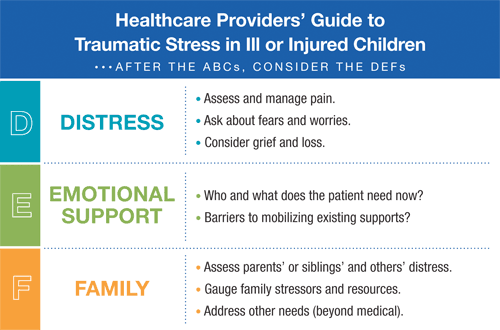
- use the D-E-F framework to guide care
- recognize signs and symptoms of pediatric medical traumatic stress
- screen for traumatic stress reactions and risk factors and make referrals for mental health care when warranted
- keep developmental and cultural factors in mind
- actively address inequities and health disparities that can impact care and increase traumatic stress
Incorporating awareness of pediatric medical traumatic stress into medical care
- Learn more about screening and assessment of traumatic stress symptoms
The D-E-F framework offers guidance for specific ways to address pediatric medical traumatic stress in the course of medical treatment and provider-patient interactions.
- Reducing Distress by optimizing pain management, asking about fears and worries, and attending to loss or grief
- Promoting Emotional support of the child via family members and the healthcare team
- Addressing Family needs that can impact child health outcomes
What about ACEs?
Many providers are aware of the potential impact of "adverse childhood experiences" (ACEs), and have begun to incorporate screening for ACEs within their practice.
The landmark ACE study of nearly 10,000 adults established wide prevalence of ten household / family factors and maltreatment in childhood, and their strong association with adult physical and mental health outcomes. More recent work has expanded the view of ACEs by adding community-level adversities and experiences of racism / discrimination and surveying more diverse groups. Relevant to pediatrics, recent work has also:
- prospectively assessed ACEs in children and adolescents,
- considered developmental differences in timing and impact of ACEs, and
- examined positive experiences in childhood that may ameliorate health impacts.
Screening for ACEs overlaps with - but is not the same as - screening for trauma exposure or traumatic stress reactions.
Clinicians screening for ACEs may also wish to consider:
- asking about other types of potentially traumatic events
- inquiring about resilience factors, coping and support systems (i.e. assessing "E" or Emotional support in the D-E-F framework for trauma-informed care)
- screening for current impact (e.g., traumatic stress reactions) of ACEs / prior trauma and of ongoing medical and treatment experiences
Primary Care Providers
Because of their ongoing relationship with patients, primary care providers (PCPs) often develop a considerable level of knowledge and trust with children and their families. Within the context of a well-child visit or during ongoing care for medical concerns, PCPs have the opportunity to learn about the emotional impact of a child's injury, illness, or other challenging experiences. In addition to any formal screening measures, PCPs can ask a basic screening question at all well-child visits: "Since the last time I saw you, has anything really scary or upsetting happened to you or your family?" and follow up to see how the child / family are coping.
Resources for primary care providers (not specific to medical trauma):
- American Academy of Pediatrics Trauma Toolbox for Primary Care
- Improving the Capacity of Primary Care to Serve Children and Families Experiencing Trauma and Chronic Stress: A Toolkit
- Care Process Model: Managing child traumatic stress in pediatric primary care settings
Several NCTSN centers have a focus on integrated, trauma-informed primary care:
- Pediatric Integrated Care Collaborative (PICC) - Johns Hopkins University
- Pediatric Approach to Trauma, Treatment, and Resilience (PATTeR) - UCLA, University of Massachusetts, and the American Academy of Pediatrics
- Pediatric Integrated Post-Trauma Services (PIPS) - University of Utah
Physicians / PAs / NPs and secondary traumatic stress
There is increasing attention to physician stress and burnout and its implications for both provider well-being and patient care. Beyond more general stress or burnout, there can be specific consequences for providers of repeated exposure to the traumatic experiences and distress of the patients they take care of.
All healthcare providers may experience secondary traumatic stress reactions related to their work caring for pediatric patients. Several surveys of pediatric providers have documented secondary traumatic stress related to their work.
Providers can address secondary traumatic stress by promoting their own and their colleagues' self-care, and being champions for organizational supports for all staff.
Tools and resources for secondary traumatic stress
-
Download a slideset on secondary traumatic stress to share with your team
-
Take a 1 hour online course on secondary traumatic stress
- Learn about quick tools for coping with stress related to COVID-19
Resources for Physicians and Advanced Practice Providers on trauma-informed care
-
Find tools to help implement the D-E-F framework in your practice setting
-
Download free patient education handouts for pediatric patients and their parents
- Find tools for screening and assessment of pediatric patients and families
- TIC Provider Survey: Questionnaire to assess nurses' knowledge, opinions, confidence, and current practices related to trauma-informed pediatric care.
- Observational Checklist for Pediatric Resuscitation: Checklist to help teams gauge assess their implementation of best practices in family-centered and trauma-informed care during pediatric resuscitation.
Resources for training programs
-
Teaching Trauma-Informed Care: A Symposium for Medical Students | MedEdPORTAL
- Training in trauma-informed physical exams: A Novel, Trauma-Informed Physical Examination Curriculum for First-Year Medical Students | MedEdPORTAL